
I’m a massive Eric Ries fan. His seminal first book, The Lean Startup, reshaped my thinking on product development and remains a major influence on my writing and teaching. I wasn’t alone. Many of the terms introduced or popularized in the book are now everyday product concepts: build-measure-learn loops, minimum viable products, innovation accounting (outcome metrics), hypothesis testing, and engines of growth. Ries, a serial entrepreneur, investor, and startup advisor, later wrote and co-edited other books that extended the impact of the Lean Startup movement. Recently he published a new book — Incorruptible: Why Good Companies Go Bad…and How Great Companies Stay Great, which is already a New York Times bestseller.
Insightful and well-researched as always, Incorruptible challenges yet more corporate “best practices.” It describes, with many vivid examples, the devastating effects of “financial gravity”: the invisible force that pulls successful companies towards short-term profits and shareholder value. We’ve all seen this happen, but Ries argues that financial gravity can be countered. In the second part of the book, he outlines governance choices and organizational practices — some of which Anthropic reportedly implemented — that protect companies from shareholder pressures and allow founders to stay focused on high-value missions for years or even decades. This is another highly recommended book, even if you’re not a founder.

As part of his book promotion tour, I had the chance to ask Eric Ries about Incorruptible, The Lean Startup, and the impact of AI on product development.
Here are some of the insights I found most interesting:
- AI makes validated learning more important, not less
- MVPs are still misunderstood, even after 15 years
- Product discovery and product delivery are not separate phases
- Organizational change starts with small “islands of freedom”
- Insisting on doing things the right way rarely gets you fired, in fact it’s a career booster
- Company profits is a narrow and often misleading measure of value
- Founder mode gets the diagnosis right but the prescription wrong
Full interview below.
1. What should product people and founders do differently after reading Incorruptible?
For readers who work in product or are building companies, what are the most important ideas from Incorruptible? More specifically, what would you hope they change in the way they make decisions, design organizations, or lead teams after reading the book?
ER: Rather than say what I hope, let me tell you what I’m already observing, because I’ve now heard from quite a few product managers, founders, leaders, board members, and investors, who say that the book has changed the way they think about business. These changes tend to be related to the core ideas of the book. When you learn to see profit in a different way, you not only cure the blindness that many business leaders have today to the negative externalities and other problems of business, but you open up the aperture of possibility. You start to see the positive externalities. You start to see the value of assets that today are mostly seen as hidden or intangible – things like trustworthiness and open source, things like honesty and integrity and safety. So quite a few people have written to me already to say that they’ve started a new business, or they’ve taken their business in a new direction, because the book helped them see what was already staring them in the face. Similarly, I’ve heard from a lot of people in HR, internal operations, leaders at various levels of organizations, that it’s changed how they lead their teams in the same way. They’re realizing that there’s a hidden resource available to them that can improve morale, that can improve productivity, that can increase innovation, that can create lots more value, using the exact same people, same business model, same strategy, same everything. It just makes it more valuable because now they understand what it is they need to optimize for.
2. Does AI reduce the need for validated learning—or increase it?
Validated learning is one of the core ideas of The Lean Startup. But with AI making software cheaper and faster to build, I’m hearing a growing argument that validation matters less: “If we can build it quickly, why spend time testing assumptions first? Self conviction, thematic support, and a dash of anecdotal evidence is all we need to greenlight an idea.”
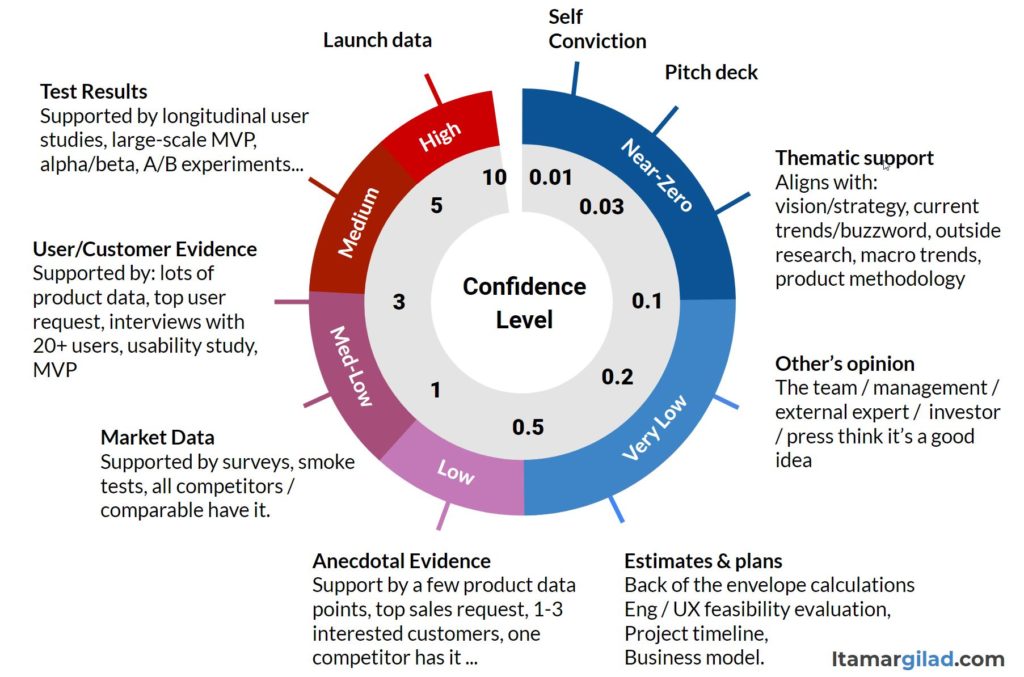
What do you make of that argument? Does abundant development capacity reduce the need for validated learning, or does it make it even more important? And how would you respond if a CEO or senior manager told a product team, “Stop researching and validating and just build”?
ER: People have been misunderstanding what it means to validate for a long time, so this is nothing new. Now we’ve just made the failures a lot more expensive. This is an irony. As the cost of building individual iterations or features goes down, the total cost of taking a wrong turn in terms of product, strategy, design or value proposition goes way up. People have been making this mistake for a long time. Validation does not mean research. It’s not a distinct process where first you test and research, then you build and go to market. Lean Startup has been trying to blow up that distinction for 15 years now. The point of calling it minimum viable product, and not minimum viable experiment or test or research, is to emphasize that we learn by building. We make real things and we expose real customers to them. And the reason that Lean Startup is built around the build-measure-learn feedback loop is because each of those three steps is of co-equal importance. And the key lesson – I was talking about this fifteen years ago, long before vibe coding and AI – is that when you reduce the cost of building as we have over the past fifteen years, since this is not the first time that cost has gone down, as the speed and cost of building change it doesn’t necessarily follow that your time through the whole loop will change. And in fact, I know many teams that are so enamored with their ability to ship features using vibe coding, that they’re not doing any measuring or learning at all. I even meet teams that instead of talking to customers or trying to sell a product to real customers, are using AI to gain feedback from simulated customers from the AI. This is incredibly dangerous.
3. What to do when the operating model of the company is holding you back?
Many practitioners tell me they struggle to implement ideas like research, discovery, or validated learning because other parts of the company’s operating model are missing: unclear mission and strategy, weak goals, limited access to customers, poor data and experimentation infrastructure, or a culture that rewards delivery over learning.

How should people respond when the surrounding system makes good product practice difficult? Is the answer different for a product lead, a director, and a CPO?
ER: No. The answer has always been the same. Again, we figured this out fifteen years ago. You have to create what we call “islands of freedom”. Little bubbles of utopia. If the whole organization is profoundly dysfunctional and there’s hundreds or thousands of employees there, I don’t really care. I only need five of them to get a startup going. So if we want to create a startup within the context of an existing organization, we simply have to correct the practice of a relatively small number of people. Now, if they have success with the product that they build in that little bubble of perfection, then we will have to draw more people into that. The bubble will have to grow, pulling more people in. But we don’t have to pull people in at random. We can start with the middle managers that are implicated in that specific project. This is the work of corporate transformation. It is highly entrepreneurial. It requires a deep level of collaboration between people at all three of the levels in your question, from the factory floor to the executive level. Without that cooperation and partnership, the old culture will prevail. You can read more about it in my book The Startup Way.
4. What responsibility does a product leader have when the incentives are wrong?
Suppose a PM or product leader knows that a decision will improve the company’s short-term metrics but harm customers or erode trust over time—and their incentives strongly favor the short-term result.
What should they realistically do? How much can an individual accomplish when the organizational incentives point in the opposite direction?
ER: The answer is different depending on how badly you need this job. And listen, I want to be super clear. I get that there are some people in this world who need the job. They cannot be fired. They are supporting their family. They cannot get another job. They cannot get healthcare some other way. This advice is not for such people. But I meet those people very rarely. Far more often in product, I meet people who are scared of getting fired because it’s going to be inconvenient. But this fear causes them to severely damage their own career. Because if you know something to be wrong and you go along with it anyway, whether it’s something big or small, you are nonetheless complicit in that act. That becomes part of your reputation, and also part of your own character, your own psychology. If you go along with this, it will not be that long before you actually are no longer capable of building products the right way. I know this from watching so many people. I could tell you dozens of stories of people that have climbed the corporate hierarchy, vowing that one day when they’re in charge, they will change things to make it work the right way. But by the time they get there, they’ve lost their moral compass and don’t even know what the right way is. There is a simple and clear solution to this that, in addition to being a little bit scary and feeling a little bit risky, is for most of the people I know who have tried it, a massive career accelerator. Which is simply to uncompromisingly and implacably insist on doing things the right way. Don’t be a jerk about it. Don’t yell and scream. Simply say “It is my judgment that this idea is a mistake, and I don’t want to do it. I think we should do it the other way instead. I think that’s more in line with the company’s values, its mission,” – whatever the reason is that you honestly believe. And then, if someone tells you not to do that, go talk to their boss. Just say, “No, I won’t do it. I really believe in this.” I have been in meetings where I was sure I was going to be fired by doing the thing I’m describing here. I have taken this risk myself. I understand how scary it is, especially the first time you do it. But my experience has been, you don’t actually get fired that often. In fact, most executives I meet wish they would fire people more often for this kind of thing because we have this fantasy that insubordination will get you fired. But even for the people where it does get you fired, it’s really good for your reputation. It’s really good for your career to be the person who got fired because they wanted to do the right thing. One day in the future, if you make a consistent practice of this, it will make you extremely attractive to the right employer for you. So you don’t have to quit in protest. You don’t have to storm the Bastille, you don’t have to lead a revolution. You can just quietly, simply, and clearly state the principle that you are defending. And then defend it and let the chips fall where they may.
5. What have you changed your mind about since The Lean Startup?
The Lean Startup has influenced how an entire generation of product people thinks about product development. Looking back more than 15 years later, what ideas from that book would you now qualify, reinterpret, or emphasize differently? And what do you think the product community has most misunderstood about it?

ER: I think it’s held up pretty well! I’m pretty pleased. And the reason I’m proud of it is in product and entrepreneurship, we are like the fruit flies of business. The average time that someone spends as a founder of a small company or a product leader who’s actually doing the entrepreneurial product design innovation kind of work is very short because people tend to either fail or get promoted. Either way, they leave our fruit fly status. Which means for an idea to have staying power in this slice of business, it doesn’t have institutional inertia to help. It’s not like, “Oh, they’ve been teaching that in schools for all these years, so of course every new generation adopts it.” Or, “The senior partners believe in this, so the junior partners learn it from them.” No. Entrepreneurs are iconoclastic. In order for them to believe something, they have to re-choose it every generation, and the generations are super short. So I really am proud of how well it’s held up because it is powered exclusively by the word of mouth transition from founder to founder and product theater to product theater. Now, is every word of it right? No, of course not. Many of the examples that are in there are pretty obsolete by modern standards, there’s plenty of things that I would change or rework. And of course, in Incorruptible I was very explicit about the fact that in The Lean Startup I repeated many of the mistakes that I inherited myself. The inherited dogmas that I learned, not about entrepreneurship, but about business in general. Things like shareholder primacy and narrow fiduciary duties, things about seeing people as resources from which value can be extracted, rather than as sources of value in themselves. I recapitulated those mistakes, and part of my goal in writing Incorruptible is to correct that.
We covered the second question in a previous answer but let’s do it again. To this day, people still – despite how many complain to me that minimum viable product is such an overused buzzword, and they’re so sick and tired of hearing about it, and I really should have called it something else – nonetheless, I still see people misunderstanding it all over the place. It’s incredibly common. Not understanding the purpose of an MVP which is simply to reduce the batch size of work, When I say a product is an experiment, people think oh, I have to do an experiment and then build a product. No. The point of MVP is to reinterpret what you’re already doing, realize that it’s an experiment and then ask yourself the question, “Is this a well-designed experiment for my actual goals?” For most people, most products, especially these days, are loaded with way too many features and way too much extra work that defeat their goal of actually discovering what customers want.
6. Founder mode and the return of founder-led leadership
There’s been a lot of buzz in recent years around “founder mode” and a broader return to more founder-led, centralized forms of leadership. The argument is often that professional management, delegation, and consensus-driven organizations become slow, bureaucratic, and disconnected from customers, and that strong founders can cut through this.
How do you view this trend? Are founder-led companies genuinely better protected from bureaucracy and short-termism, or does concentrating more authority in the founder create a different set of risks?And in the context of Incorruptible, what distinguishes healthy founder leadership from a company that has simply made the founder the ultimate, largely unchecked source of truth?
ER: This question sets up a false dichotomy between two things that are both true. I covered this extensively in the book. There’s a whole section of founder mode because generally in the founder mode discourse, the diagnosis is correct, but the prescription is wrong. The diagnosis that professional managers are captured by this gravitational field of best practices, that they’re more loyal to that consensus than to any particular mission or goal, including the founder’s vision, is, of course, completely true. And it’s also true that a founder has the moral authority to cut through that stuff if they’re willing to use their political capital to do so. And to the extent that the founder mode discourse has encouraged founders to be more courageous in exercising that authority, I think that’s been a good thing. On top of all that, by the way, we have a lot of data that founder-led companies outperform non-founder led companies. That’s because the consensus that professional managers have been trained to follow, the so-called “good governance standards”, causes subpar company performance. For example, since 2008, companies rated as having “good” governance have had worse performance than companies rated as having “bad” governance. So I don’t really know what we’re doing here! The problem, as the question also points out, is that first of all, founders die. So if you want to build a truly long-term institution, there needs to be a plan beyond founder mode. And secondly, we have seen that there are certain practices that are able to cause this moral authority that we claim is only imbued in the founder to survive succession. I call it the architecture of institutional longevity in the book. And I’m not going to get into all that, since this is a short answer, but in the book, I lay out how we can build organizations that are capable of maintaining this ethos for generation of manager after generation of manager. And then we don’t need founder mode at all anymore. What we need is the ability to imbue the leadership of the company with the moral authority to act decisively in defense of its values. And when you have that, that is the number one antidote to both mission drift and bureaucracy.
Join my newsletter to get articles like this
plus exclusive eBooks and templates by email
Upcoming Workshops
Practice hands-on the modern methods of product management, product discovery, and product strategy.
Secure your ticket for the next public workshop
or book a private workshop or keynote for your team or company.
